24
Oct
-
 Andrew McColl - Chairman
- 24 October 2026


 Andrew McColl - Chairman
RPSA Chairman Andrew McColl reflects on the People's Emergency Briefing at the Victoria and Albert Museum and asks whether residential property surveying needs to rethink how we assess Britain's existing housing stock.
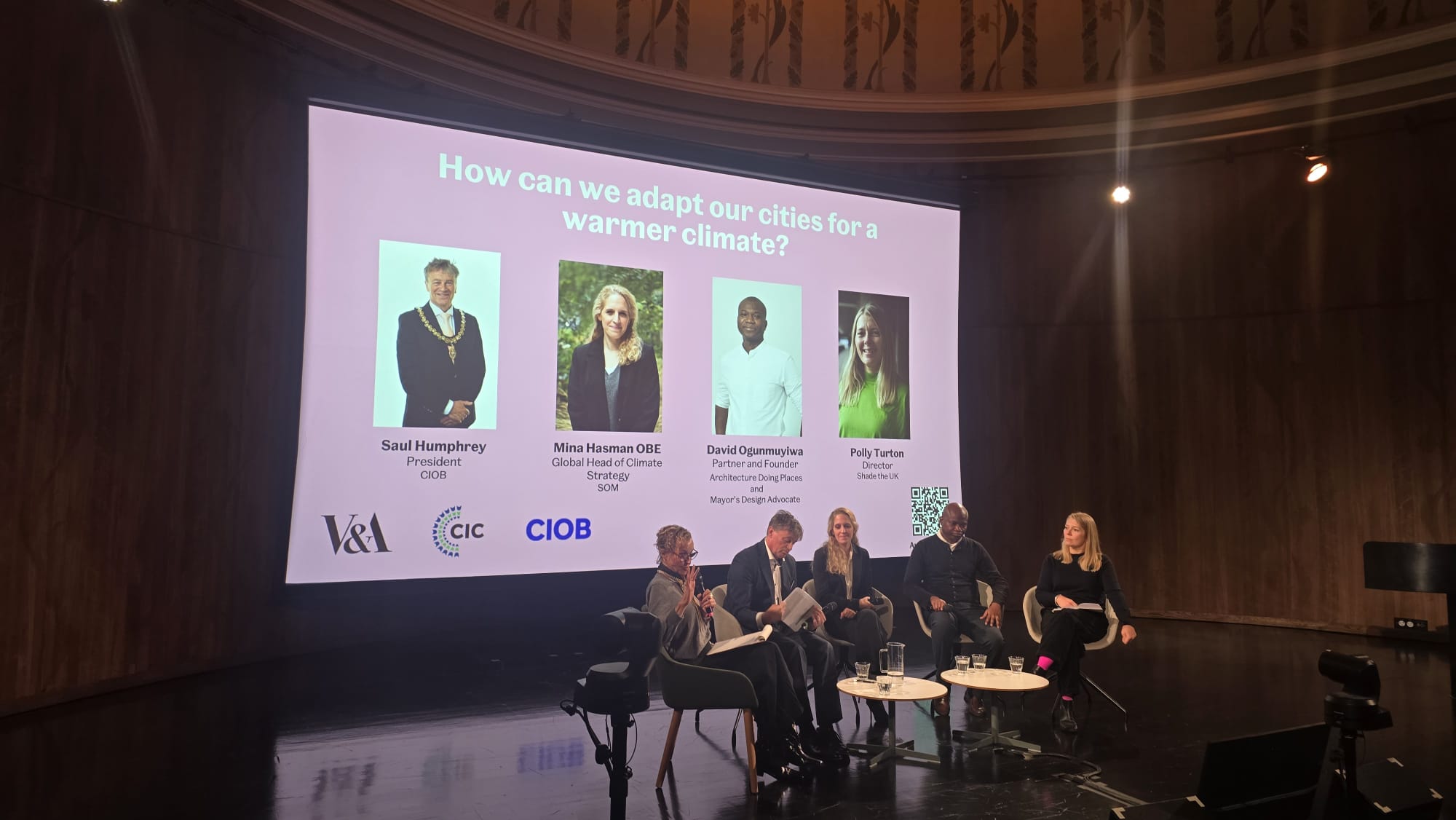
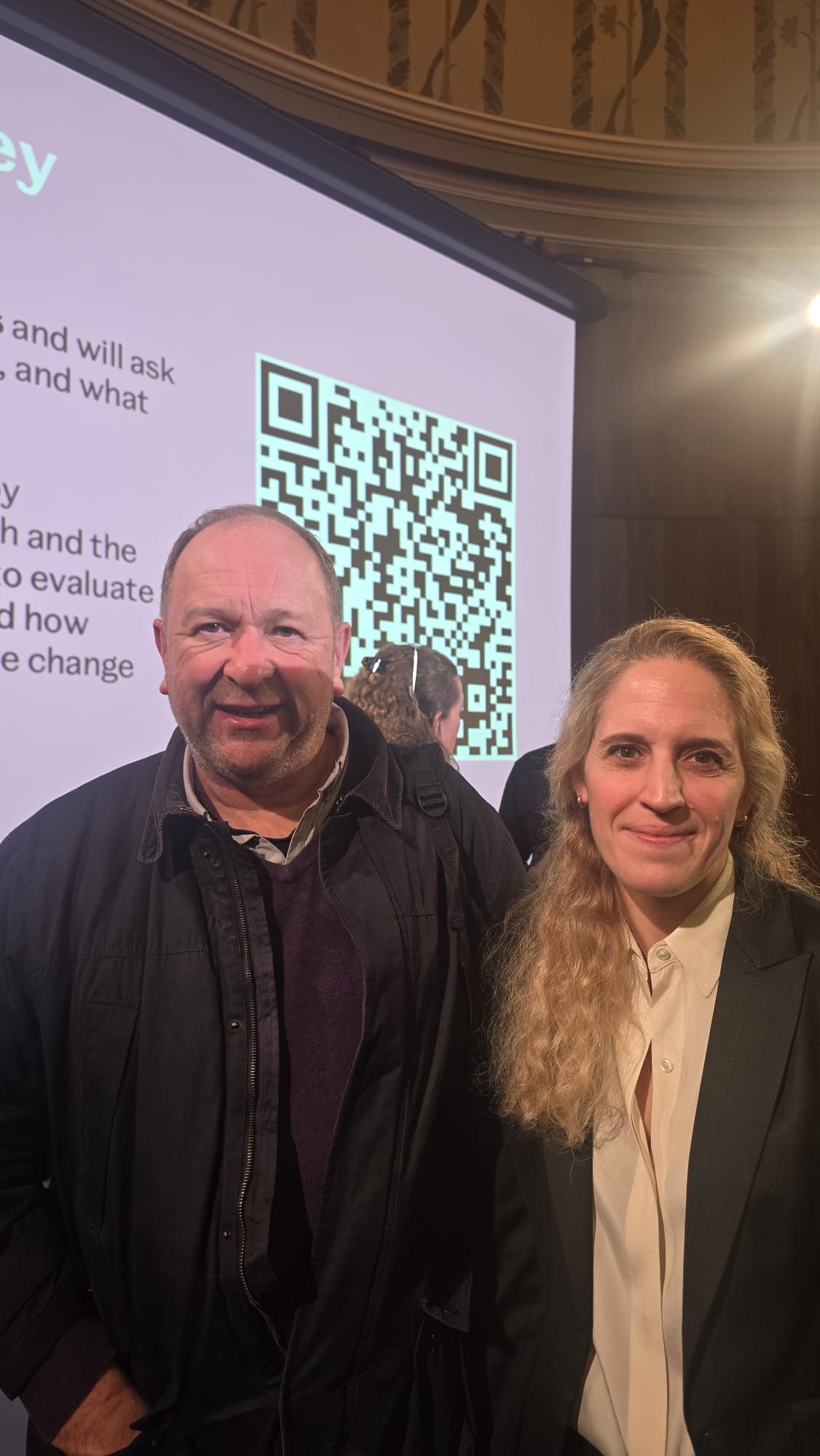
On Wednesday 21 October, I attended the People's Emergency Briefing at the Victoria and Albert Museum in London, representing the Residential Property Surveyors Association (RPSA), alongside fellow Council member Sean Curtin.
The event was held at the V&A, with the Construction Industry Council (CIC) in partnership with the Chartered Institute of Building (CIOB). It brought together professionals from across the built environment to consider how our towns, cities and buildings will need to adapt to a changing climate.
The centrepiece was a screening of The People's Emergency Briefing, a fifty minute film presented by Chris Packham. It is drawn from the National Emergency Briefing held in Westminster in November 2025, where leading scientists and policy experts set out the evidence on the climate and nature crisis to an audience of more than a thousand politicians and leaders from business, culture, faith and sport. The film was released nationwide on 7 April 2026 and is now being screened in communities, workplaces and council chambers across the country.
Following the screening, a panel discussion explored how the built environment could respond.
The panel included Saul Humphrey, President of the CIOB, who has made climate literacy and resilience the theme of his presidential term, Mina Hasman OBE, Global Head of Climate Strategy at SOM and Chair of the CIC Climate Change Committee, David Ogunmuyiwa of Architecture Doing Places and a Mayor's Design Advocate, and Polly Turton of Shade the UK. The discussion was chaired by Melissa Painter of the V&A.
I know Mina through my involvement with the CIC Climate Change Committee, and it was particularly encouraging to see these matters being discussed across the wider construction industry.
However, I came away thinking about something much closer to home for residential surveyors.
As surveyors, we spend our working lives examining buildings, identifying defects, assessing their condition and advising clients about what we find.
But there is another question that I believe will become increasingly important.
Is a property that performs adequately today necessarily equipped to cope with the climate conditions it may face over the next 20 or 30 years?
Britain has an enormous stock of older housing. Many of these buildings have stood for more than a century and have performed remarkably well. However, they were constructed using the methods, materials and design expectations of their time, and those expectations were based on the weather we used to get.
We already know that our climate is changing. The Met Office projects warmer and wetter winters, hotter and drier summers, and more frequent intense rainfall events.
This raises some important questions for our profession.
Take something as familiar as a pitched roof.
Older roof structures can differ considerably from modern construction, particularly in the way structural members are connected and restrained against movement or wind uplift. Modern construction incorporates far more explicit requirements for restraint, fixings and resistance to wind loading, and the same is true of the covering itself. Current practice expects tiles and slates to be mechanically fixed to a specified pattern, with ridges and verges dry fixed rather than relying on mortar.
A great deal of older stock sits in a different world. Tiles hung on their nibs with nailing confined to the perimeter courses, ridge and verge mortar that has been in place for half a century, underlay that has gone brittle or is absent altogether.
That does not mean older roofs are automatically defective or unsafe. Far from it. They have performed perfectly well against the wind speeds and rainfall intensities we have historically experienced.
But should we be paying greater attention to their construction, connections, exposure and evidence of previous movement or storm damage?
Could a roof that has performed satisfactorily for decades become more vulnerable under different weather conditions?
And how should we advise a purchaser where the arrangement is entirely typical of its age but may not offer the resilience expected of modern construction?
These are questions worth exploring.
This is another area that concerns me.
We inspect gutters, downpipes, gullies, drainage arrangements and visible signs of inadequate rainwater disposal.
But are we giving enough consideration to capacity?
A rainwater system that has coped with ordinary rainfall for many years may struggle during increasingly intense downpours. Gutters and downpipes are sized against assumed rainfall intensities, and when that assumption is exceeded the water does not politely wait its turn. It goes over the front edge of the gutter, down the face of the wall, into the subfloor and onto the wall plate.
Are the gutters sufficiently sized? Can the downpipes carry the water away? Are underground drainage arrangements adequate, and what happens when the receiving system is overwhelmed?
Then there are soakaways.
Many properties rely on soakaways installed years ago, sometimes with little documentation about their size, construction or effectiveness.
Are they large enough for the rainfall events we may increasingly experience?
It is worth remembering that the demand on them has quietly increased as well. Two decades of paved front gardens, extended driveways, decking and garden rooms mean that a great many soakaways are now receiving considerably more water than the arrangement was ever designed to take, while longer dry spells can alter the behaviour of the ground they discharge into.
A visual residential survey cannot normally establish the capacity of a buried soakaway or underground drainage network. Nevertheless, recognising the potential vulnerability and knowing when further investigation is justified could become an increasingly important part of professional judgement.
The same applies to surface water collecting around buildings, raised ground levels, paved gardens and changes to surrounding development.
We must also look beyond storms and flooding.
Longer periods of high temperatures can affect how comfortable and safe buildings are to occupy, particularly where properties have limited ventilation or are vulnerable to overheating. New homes have had an overheating requirement in the Building Regulations for several years. Existing homes have nothing of the kind, yet loft conversions, single aspect flats and heavily glazed extensions are precisely where occupants will feel it first.
Prolonged dry periods can affect shrinkable clay soils, potentially contributing to ground movement, while subsequent wet periods bring a different set of challenges. Those of us working on the clays of the South East need no introduction to this, nor to the mature trees that were planted when nobody anticipated the summers we are now seeing.
And as we improve the energy performance of older homes, we must remain alert to the unintended consequences of poorly considered insulation, ventilation and moisture control measures.
These matters are not entirely new to surveyors. We already encounter them.
The question is whether we need to bring them together into a more deliberate approach to climate resilience.
Interestingly, only days before the briefing, during the Environment Agency's Flood Action Week, the Government and Flood Re announced plans to pilot Flood Performance Certificates (FPCs). The announcement came from Defra and the Floods Minister, Emma Hardy, on Tuesday 13 October.
The intention is that FPCs become a trusted source of information on a property's flood risk and resilience in much the same way Energy Performance Certificates are for energy. The pilots will test a Flood Performance Rating, which breaks the risk down into exposure, characteristics and resistance, drawing on flood risk data already published through the Check Your Flood Risk service and covering risks including rivers and surface water.
Where an owner has taken action, such as fitting flood barriers or water resilient flooring, that will be reflected in the assessment, and where resilience could be improved the certificate is meant to say so and identify what is needed. Flood Re is introducing the certificates, with pilot work beginning this year in areas at risk of flooding and a growing number of pilots through 2027 and beyond. Perry Thomas, Chief Executive of Flood Re, described the purpose as turning awareness into action, with the longer term ambition that resilience improvements are recognised and rewarded by insurers. The scale of the problem was put plainly by Aviva, which expects a quarter of homes to be at risk from flooding by 2050. Nationwide, speaking as a lender, welcomed the prospect of standardised information feeding into decisions across the housing market.
It is genuinely early days. The certificate design published alongside the announcement is a mock-up for illustration only, and the final content and format are still being developed.
Nevertheless, it is an important development, and one line in the announcement should give our profession pause. Flood Re's stated ambition is for app-based flood self-assessments to become routine, so that householders can understand their own risk, act on it, and in time have those actions recognised by their insurers.
Read that again. The direction of travel is a homeowner, with a phone, assessing their own property, and that assessment eventually carrying weight with an insurer and, if the lenders get their way, with a lender too.
I am not against self-assessment. Anything that gets people to look honestly at their own home is welcome, and Flood Re is right that awareness has to turn into action. But every residential surveyor reading this knows what a householder will miss. Ground levels raised above the damp proof course by successive patios. A gully that has been paved over. An air brick blocked with expanding foam. A cellar light well that nobody thinks of as a point of entry. A single skin rear addition on a lower slab than the main house. Resistance measures fitted to the front door while the back door sits two courses lower.
Those are not exotic defects. They are Tuesday morning. And they are precisely the things that decide whether a property floods, and how badly.
So the question for the RPSA is not only whether climate resilience should appear in a survey report. It is whether a rating generated by the occupier, unverified, should be the version of the truth that follows the house into a transaction, when there is an established profession that already attends the property, already assesses construction, levels and drainage, and already writes independently for the consumer.
What role should the residential property surveyor play in helping buyers understand these risks?
It seems sensible that our profession should contribute to the discussion about how climate resilience is assessed, what can reasonably be established through a non-invasive inspection, where a self-assessment needs professional verification and when specialist investigation is appropriate. The pilots are running now and the assessment methodology is still being written. That is the moment to be in the room, not after a framework has been settled and residential surveying is left fitting in around it.
The announcement is worth reading in full: New pioneering certificates to help homeowners cut flood risk

I do not believe the answer is to turn every residential survey into a specialist climate assessment or burden purchasers with unnecessary additional reports.
Nor should surveyors be expected to predict precisely how a particular building will perform in a future extreme weather event.
We must remain realistic about the limits of an inspection.
However, I do believe we need to start reviewing our approach, our technical guidance and the knowledge we expect practising surveyors to maintain.
There may be opportunities to develop further CPD, examine particular construction risks and work with specialists across the built environment to establish practical guidance for members.
On the Flood Performance Certificate in particular, this is something the RPSA is in the process of pursuing. We are seeking to engage with Flood Re while the pilots are live, to understand how the assessment is being developed and to make the case that there is a role for independent professional inspection alongside, or in verification of, a homeowner self-assessment. I will report back to members as that progresses.
There is also something our members can give that nobody else can. Between you, the RPSA membership inspects a very large number of homes every week. If we start capturing what you are actually seeing, the overflowing rainwater goods, the storm-lifted coverings on older roofs, the soakaways that have given up, the overheating complaints from clients, then the association will hold ground level evidence on the existing housing stock that no policy body currently has. I would be glad to hear from any member with examples.
The RPSA's involvement with the Construction Industry Council gives us an opportunity to contribute to those wider discussions and ensure the residential surveying profession is represented.
I am also hoping that Mina Hasman will be able to join us at Surveyor Live 2027, subject to her diary commitments. It would be an excellent opportunity to bring some of these conversations directly to practising surveyors.
I would encourage members to find out more about the film.
It is approximately fifty minutes long and brings together scientific evidence, the wider implications of climate change and the positive actions that can be taken.
The organisers distribute it through screenings rather than as a general release, and their website carries an interactive map showing where screenings are taking place, along with everything needed by anyone who wants to host one. Businesses, institutions and local councils are hosting screenings for their own staff, members and stakeholders, and the organisers supply a facilitation guide and materials for exactly that purpose.
The People's Emergency Briefing: official film information
The RPSA will also explore whether we can arrange an opportunity for members to see the film, or share access directly when the organisers permit wider viewing.
My takeaway from the event was not simply that climate change presents a challenge for the construction industry.
It was that the challenge does not end when a building is completed.
Millions of existing homes will still be standing, occupied, bought, sold and inspected for decades to come.
We cannot rebuild the entire housing stock, but we can improve our understanding of how it performs, identify vulnerabilities and help owners make informed decisions.
And that starts with asking the right questions.
As surveyors, we are very good at identifying what is wrong with a building today. Perhaps it is time we gave more thought to what could go wrong tomorrow.
Andrew McColl