


11
Oct
-
 Andrew McColl - Chairman
 - 11 October 2026


 Andrew McColl - Chairman
Consumers now have the same clever tools we do. That is not a threat, but it is a very good reason to check that your own house is in order.
I came across it quite by accident. A website called ClaimWiz, which exists to help members of the public put a complaint together. Nothing unusual in that. What stopped me was the row of tiles on its home page. Flight delayed or cancelled? Faulty car? Deposit being withheld? Refund refused? Broadband or mobile problem? Insurance claim rejected? And there, sitting quite comfortably in the bottom corner next to the rejected insurance claims: Survey missed a defect?
Think about that for a moment. The site presents a complaint about a survey as just another everyday consumer problem, alongside cancelled flights and dodgy phone contracts, with an everyday consumer tool to deal with it.
Most of us now use AI in one way or another. We use it to organise our notes, tidy up our letters, check our spelling and, let us be candid, to make us sound a little more polished than we might at half past six on a Friday. It would be a strange sort of thinking to assume that the professional has a monopoly on that. The public have exactly the same access to exactly the same tools, and they are every bit as entitled to use them.
So what does that actually mean for you? I do not think it means there are suddenly more bad reports about, or that we are about to be buried under a pile of spurious claims. I think it means something simpler. A client who feels let down can now set out what happened, in order, with the dates, the documents and the outcome they want, in a form that reads as though it was prepared by someone who knows what they are doing. The person who would once have been intimidated by the prospect of taking on a professional, and perhaps let the matter drop, may now feel rather more confident. The Legal Ombudsman has noticed the same thing in its own sector and has said so, while also warning consumers that AI can exaggerate or invent things if it is let off the lead. Both halves of that are worth remembering.
In short, the complaints that arrive may not be more numerous or any more justified than before, but they may well be better organised. And a well-organised complaint deserves a well-organised response.
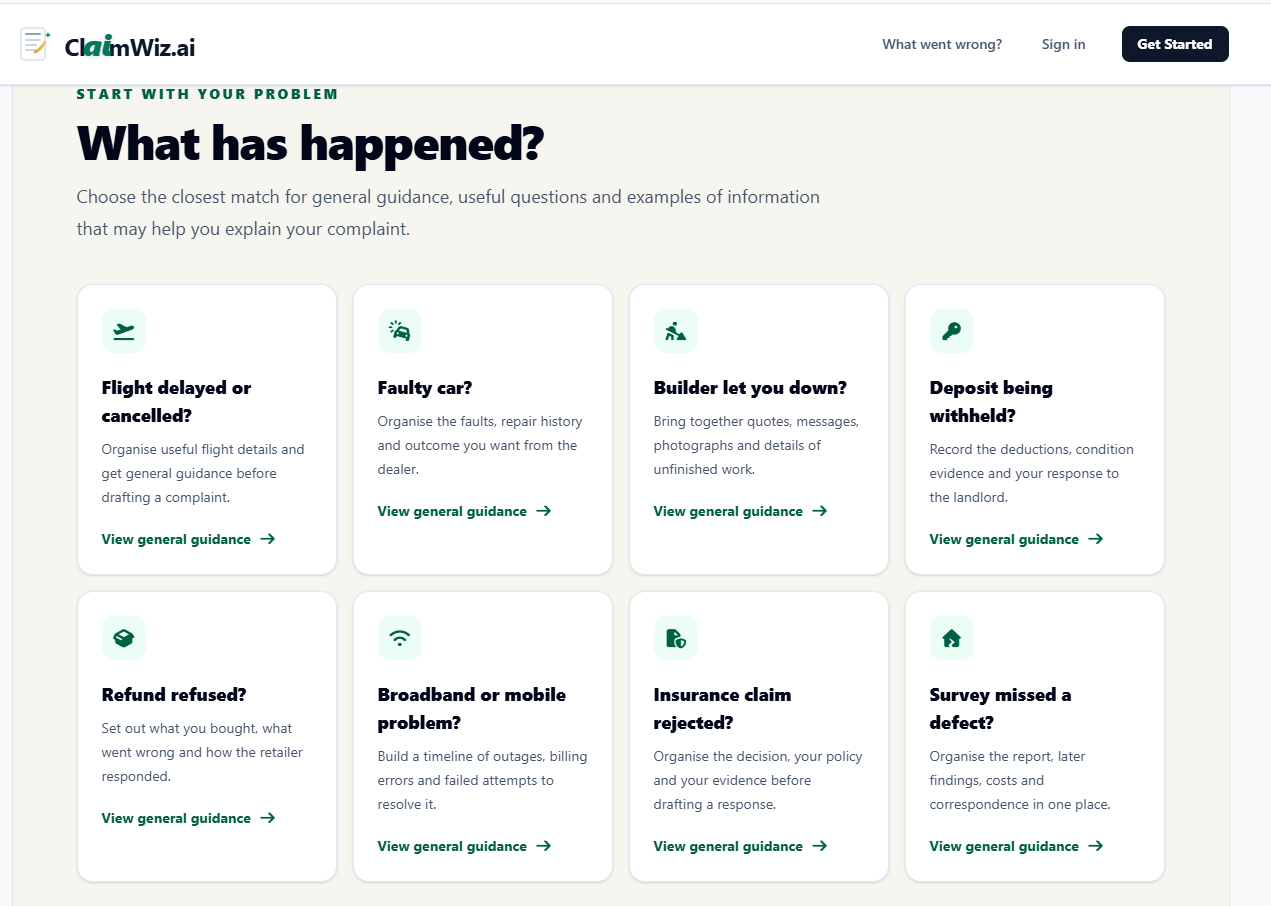
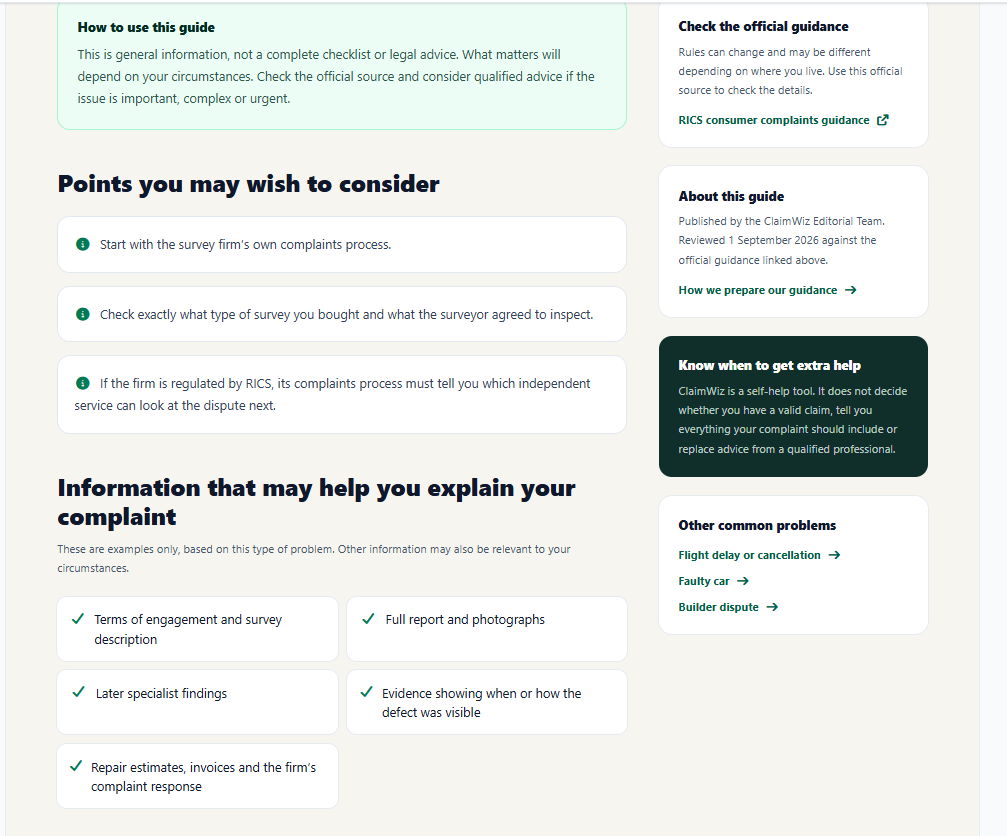
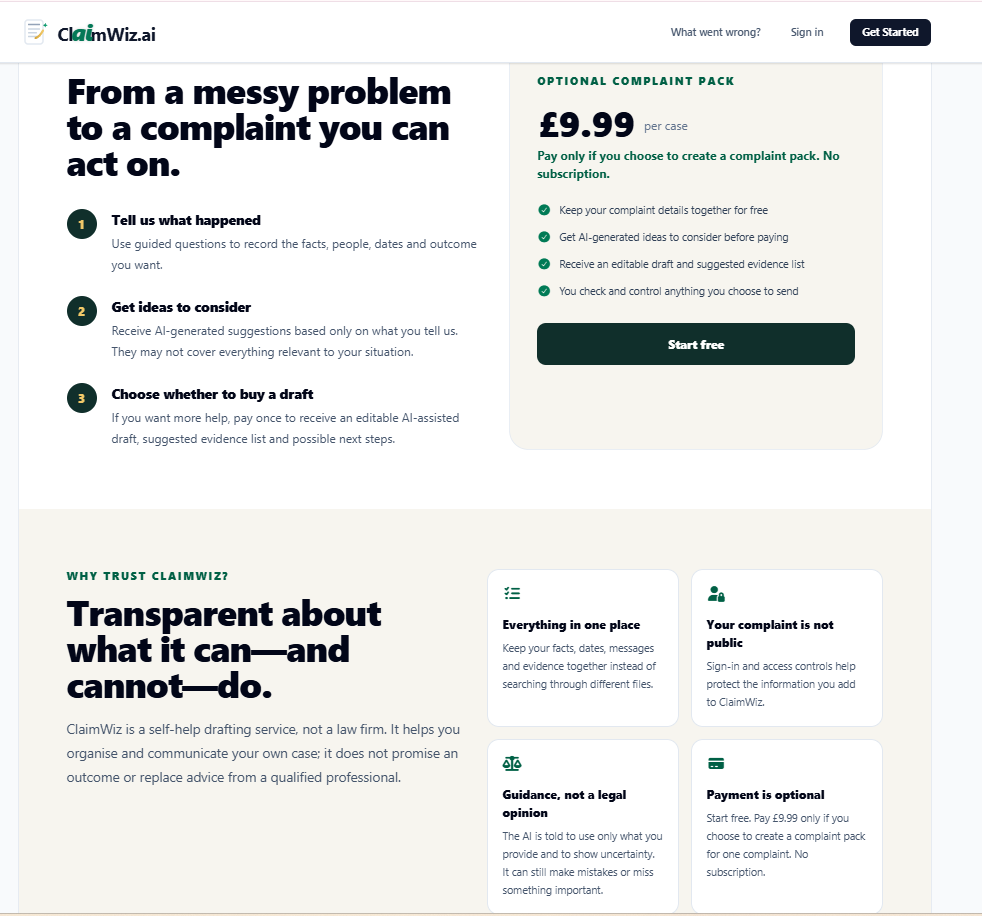
I am not going to demonise this particular site, because I do not think it deserves it. There is a fair bit of honesty about it. It tells people to start with the surveyor’s own complaints procedure. It tells them to check exactly what type of survey they bought and what the surveyor actually agreed to inspect. It makes the point, which some of us have struggled to get across to our own clients, that the fact a defect exists does not always mean the surveyor should have found it during the survey that was bought. It lists the sort of information a complainant ought to gather: the terms of engagement, the full report and photographs, any later specialist findings, evidence of when the defect became visible, and repair estimates. It even links straight to the RICS consumer complaints guidance and says in plain words that it is a self-help tool, not a law firm, and cannot tell anyone whether they have a valid claim.
That is, frankly, a more measured starting point than some of the complaints I have seen over the years, and it will not be the last site of its kind. I would expect more of them. So the question is not whether consumers should be allowed to use them. Of course they should. The question is what you have on your side of the table.
This blog is not about building yourself some sort of tungsten and stainless steel drawbridge to make you impenetrable to scrutiny from outside. You cannot, and you should not try. It is about taking an honest look at your own practice and asking whether the things that ought to be in place actually are.
At the RPSA we help members with complaints all the time, and I will tell you the thing I come across most often. Too often the CHP is missing, out of date, or sitting in a folder that nobody in the business has opened since it was downloaded. If you have just thought “what’s a CHP?”, it is a complaints handling procedure, and it is the starting point for everything else. The real test is simple: if a complaint arrived tomorrow, would your arrangements actually work? A few questions to ask yourself, in no particular order of discomfort:
The emphasis is on procedures that work in practice, not documents downloaded once, filed and forgotten.
It is not only about procedures. How well your reports are written matters just as much, and I see the same silly mistakes undermining otherwise perfectly sound surveys. The most common is the condition rating that was never changed from the template, so the narrative describes a defect that needs attention and the rating says all is well. “I meant it to be a 2, I just forgot to change it” is a sentence I have heard more times than I would like, and it is a very difficult sentence to say to an ombudsman.
So check that every rating matches the finding, the explanation and the action you are recommending. Check that the summary includes the significant findings and not just the convenient ones. Check that the report says clearly what was inspected, what was not, why access was restricted and what you advised as a result. A clear report and a clear file are the same thing seen from two directions, and together they are your best defence.
So the day comes, and a very well put together complaint lands in your inbox. What then? First, do not take it personally, and do not judge it by its polish. A beautifully formatted letter does not make its allegations true, and the fact that a piece of software may have helped to write it is no reason to treat a legitimate concern with anything other than respect. Respond to the substance.
Second, follow your own procedure, which is of course why you need one. Acknowledge the complaint promptly and warmly, without making any premature admission of liability. Gather the file. Check each point against the evidence, not against your memory. And check your policy’s notification requirements straight away. Most PI policies require you to notify not only claims but circumstances that could lead to a claim, so do not wait for a formal demand before contacting your broker or insurer where the policy requires it. Seek their guidance before admitting liability or agreeing any compensation. Failing to comply with the policy conditions can put your cover at risk, and that is a risk no surveyor needs to take.
A word on that, because it worries people. Some surveyors sit on complaints for weeks because they fear what a notification might mean at renewal. Whatever the answer to that question, it is not a reason to delay a notification the policy requires, because the consequences of a late notification are likely to be far worse. The RPSA has worked closely with Howden for some years precisely because they understand our sector, and they provide a clear route for notifying complaints, claims and circumstances, with guidance on how to do it. Use it.
None of this needs to be a major project. It requires an afternoon, a cup of tea and an honest look at what you have in place. The good news is that the RPSA has already done most of the heavy lifting. The Useful Documents area of the website contains a whole suite of guidance written for exactly this purpose, and the ones below are a good place to start.
| What to review | RPSA Useful Documents to read |
|---|---|
| Handling a complaint | 19 Handling Complaints Well27 Complaints Handling and Claims Management Procedure |
| Insurance: prevention and notification | 24 Claims Prevention Top Tips20 Howden Claims Notifications: How To |
| Client terms and consumer rights | The correct terms of engagement for each service you offer39 Cancellations, Refunds and Consumer Rights |
| Report quality | 18 Writing Better Survey Reports41 RPSA (or RICS) Survey Inspection and Reporting Standards |
| Safe working (related reading) | 34 Health and Safety in Property Inspection Guide33 Building Safety Act 2022 Guide |
If you take one thing from this, let it be this. A consumer asking for help to put a complaint together is perfectly reasonable. A surveyor having clear procedures, sound records and a fair, calm response is equally reasonable. Get those things right and you will not only be better protected when a complaint arrives; you will be a better surveyor, and your clients will have less reason to go looking for a website in the first place.
There is our "AI" summary video (No Hollywood budget as yet) - yes, we will learn how to dub over them soon.


