
25
Sep
-
 Andrew McColl - Chairman
 - 25 September 2026


 Andrew McColl - Chairman
 On 22 September I found myself at Hutong, thirty-three floors up The Shard, at a private roundtable dinner hosted by Ctrl-Shift, the people behind the Smart Data Forum. Around the table were senior figures from Rightmove and Zoopla, the Bold Legal Group and the Conveyancing Association, the Department for Business and Trade, and one or two people who spend their working lives thinking about data rather than bricks. The brief was refreshingly blunt: there is plenty of interest in Smart Data for property, and plenty of clever plumbing being built, so what is actually stopping it becoming something the market invests in and uses?
I went along to offer a residential surveying perspective, which in a room full of portals and lawyers tends to mean being the person who asks where the information came from in the first place. It turned out to be the right question.

If you have used an app that pulls your bank accounts together in one place, you have used Smart Data. It is the secure sharing of information a business holds about you, at your request, with an accredited third party who uses it to give you a better service. Open Banking is probably the best-known example. The Data (Use and Access) Act 2025 gives government the power to set up similar schemes in other sectors, and the Smart Data Strategy published in March commits to five or more active schemes by 2030 and twenty or more by 2035.
Property is on the list, and for good reason. Government's own figures say the average purchase takes around 120 days once an offer has been accepted, around 60% longer than in 2007. Roughly one in three transactions falls through, with failed transactions costing consumers around £400 million a year. Government modelling estimates that a homebuying Smart Data scheme could contribute around £4.2 billion a year to GDP by 2043, depending on how it is implemented, alongside an estimated £28.7 billion of net social value between 2028 and 2043. The idea is simple enough: the information about a property, and about the people buying and selling it, is gathered once, verified, and then moves securely between agent, conveyancer, lender and surveyor with the consumer's consent, instead of being requested, retyped and re-checked five times over.
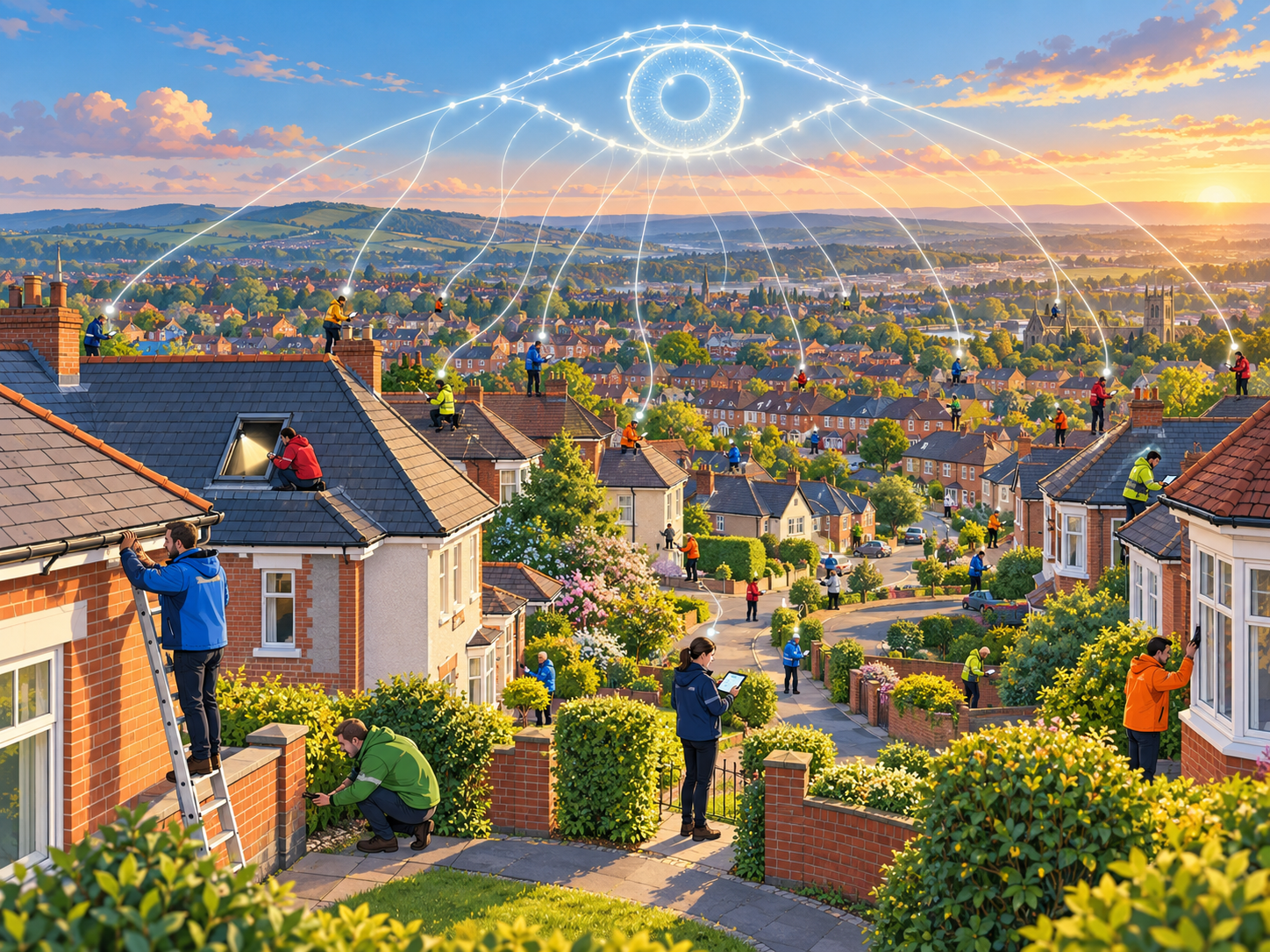
Two things this summer have moved Smart Property Data from an interesting industry discussion to something much more immediate.
In June, the Ministry of Housing, Communities and Local Government published its home buying and selling reform roadmap. It sets out a direction towards upfront sales packs prepared before marketing, ultimately including searches and a property condition report, alongside greater use of digital packs and property logbooks. The roadmap also specifically envisages surveyors gathering and verifying condition-related information.
Then in July, the Department for Business and Trade opened its Smart Data multi-sector call for evidence. Property has an entire section of its own, covering questions such as data standards, liability, interoperability, consumer protection and what businesses would actually need in order to participate in a future scheme. The evidence gathered now will inform the design of what comes next.
The deadline is 1 October, and the RPSA will be responding.
What I had not appreciated until I started reading after the dinner was just how timely our conversation had been. The Government is asking precisely the questions that residential surveyors need to be answering now: what would enable practices to participate, what prevents information being shared today, how professional condition information could become machine-readable without losing its meaning, and how reliance and liability should work when that information travels beyond the original client.
Those are not questions we should leave for somebody else to answer on behalf of the surveying profession.
RPSA Member AlertThe Government's Smart Data call for evidence is open now. The RPSA is preparing its response before the 1 October deadline and would particularly welcome members' practical views on sharing survey and condition data. Please send them to chairman@rpsa.org.uk by Tuesday 30 September. |

Much of the Smart Data conversation is understandably about how information moves: standards, APIs, consent, identity, interoperability and trust. But before information can move, somebody has to create and verify it.
Title information can come from HM Land Registry. Searches and environmental information come from established authoritative sources. But information about the physical condition of a home still has to begin with somebody looking at the building.
Government's own roadmap recognises this. It says that sellers would retain responsibility for ensuring the future sales pack is prepared, while relevant professionals would gather and verify the information within it, specifically identifying surveyors as responsible for condition-related information.
That could represent a significant change for residential surveying. If meaningful condition information is required before marketing, the surveyor moves from being somebody often instructed well into the transaction to one of its earliest professional touchpoints. That makes surveyors obvious potential creators and holders of condition-related data within a future property Smart Data scheme.
For the RPSA, that is particularly interesting. We have a national membership of more than 1,000 and a network of residential surveyors already inspecting homes across the country. Seen through a Smart Data lens, that is not simply a membership network. It is potentially a nationwide source of professionally gathered, verified and attributable property information.

This is not a theoretical position for us. RPSA panel surveyors are already carrying out seller-commissioned Home Insight surveys in practice: a condition survey carried out to a defined standard, funded upfront so the seller pays nothing at the start, and made available to prospective buyers during marketing. The model already tackles several of the practical concerns raised in the Government's consultation, including the upfront cost to sellers, buyer confidence and the need to be clear about how current the information remains. Our early experience has been encouraging.
Now take that one stage further. Imagine condition information gathered at the beginning of a sale in a structured digital form, with a clear date, source, scope and provenance. Some of that information could potentially travel with the transaction and, in time, contribute to the property's digital record. When work is carried out or the property changes, that record can evolve rather than disappearing into somebody's filing cabinet.
That does not mean a survey becomes permanently valid. Quite the opposite. Buildings change, defects develop and professional opinions have a date and a scope. Smart Property Data will only command trust if users can see who created it, when it was created, what was inspected and when it needs checking again.

The RPSA is preparing its response to the Department for Business and Trade now, ahead of the 1 October deadline. We will focus on the property questions and draw directly on the experience of residential surveyors and our developing experience of seller-commissioned surveys.
We want condition information to be treated as a serious part of the Smart Data discussion from the outset. That means recognised professional standards, clear provenance, sensible rules around reliance and liability, and a system that works for the sole practitioners and small firms who make up much of residential surveying, not simply for large technology businesses.
Most importantly, the people who actually inspect homes need to help shape the rules governing the information they create.
If you are an RPSA member, I would particularly like to hear from you before we submit our response. What would make you comfortable sharing survey data through a future Smart Data scheme? What would concern you? And what opportunities do you think we should make sure Government understands?
A line to chairman@rpsa.org.uk is all it takes.
And if you were at that dinner and are reading this: thank you. It was a good evening, the conversation was better than the view, and I paid for the lack of sleep the next day. It was worth it.
Notebook recap video below (sorry about the annoying AI voice) - No Hollywood budget yet.


